
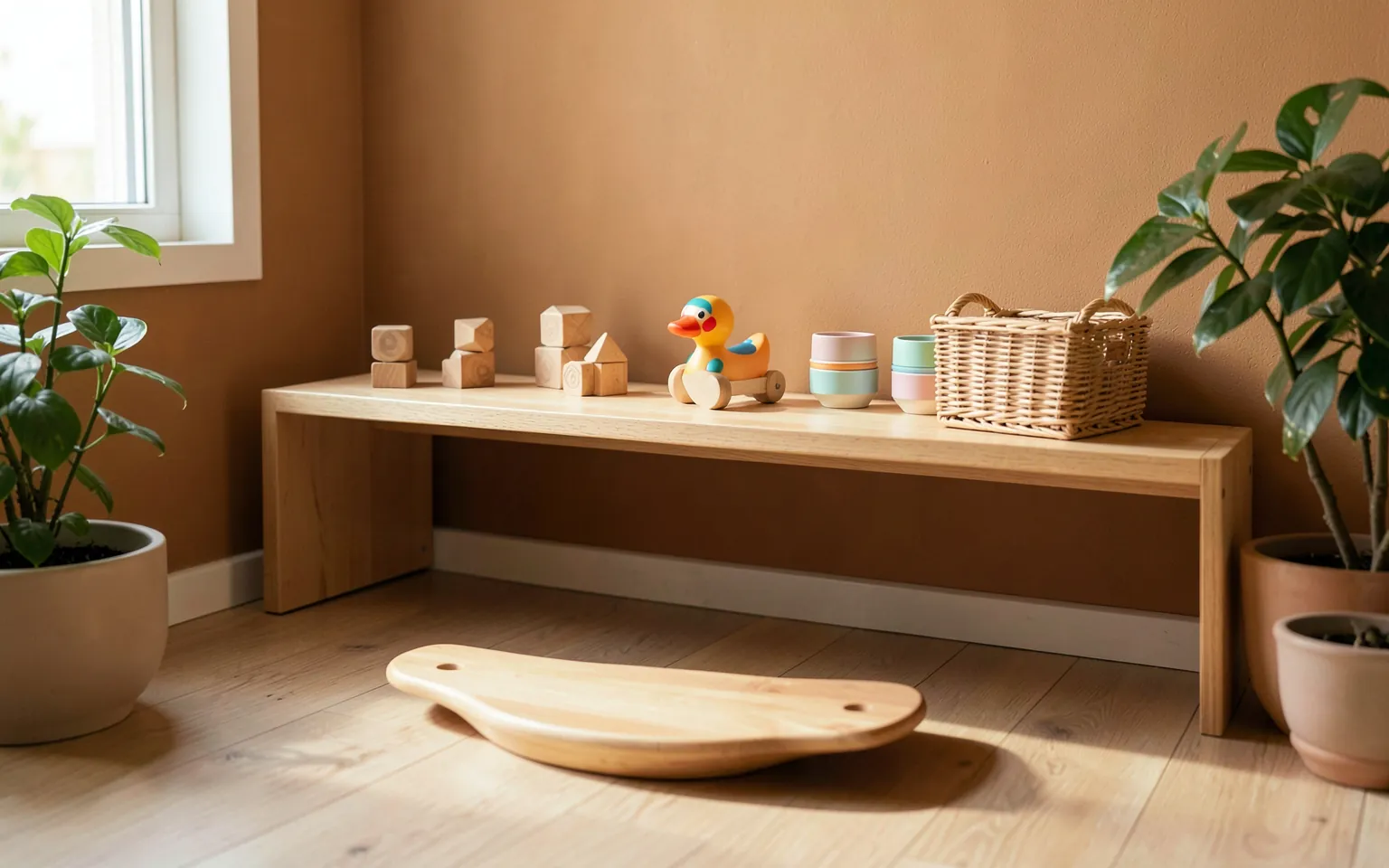
Montessori has become a shopping category. Search for it and you’ll find wooden everything, at prices that suggest a toy only counts if it comes from a specialist catalogue. But the ideas Maria Montessori described a century ago are mostly about how you arrange a child’s world, not what you buy for it. Here is what actually makes a difference at home.
Fewer toys, on display
The single most useful change costs nothing: put most of the toys away. A low, open shelf with six to eight things on it, each with its own space, invites a child to choose and to finish what they started. A toy box with forty things in it invites them to tip it out.
Rotate every week or two. Toys that come back after a break feel new, and you’ll quickly see which ones get chosen every time and which never do.
Real things, child-sized
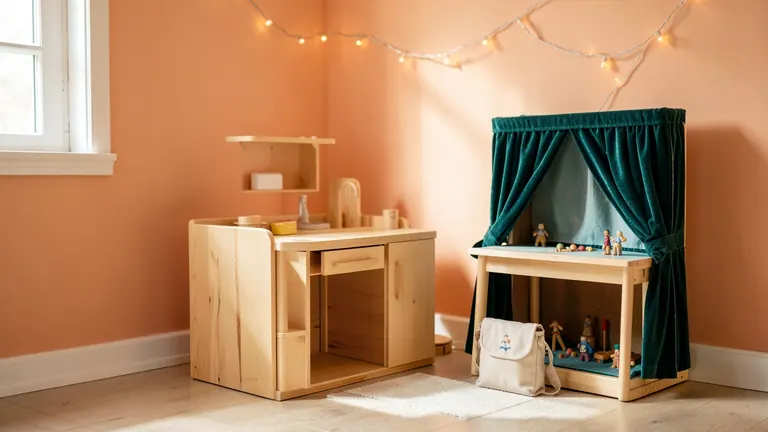
Montessori classrooms are full of real tools at a child’s scale: a small jug that pours, a brush and dustpan, a cloth for spills. At home this can be as simple as a step stool at the kitchen counter and a low hook for their coat. A play kitchen next to the real one works in the same spirit: children want to do what you do, where you do it.
Toys that do one thing well, or many things freely
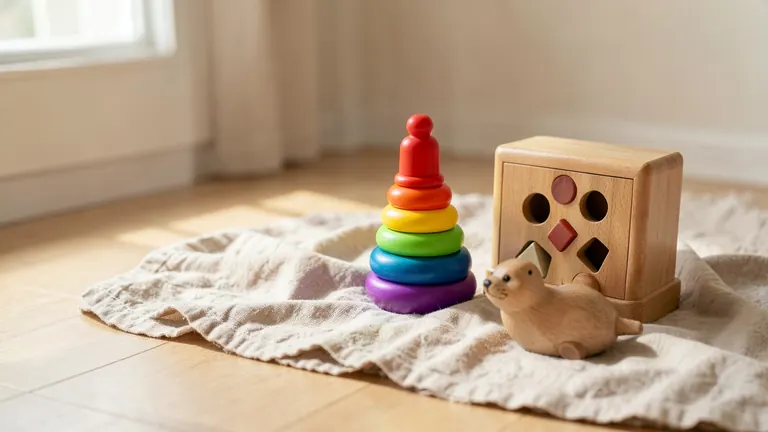
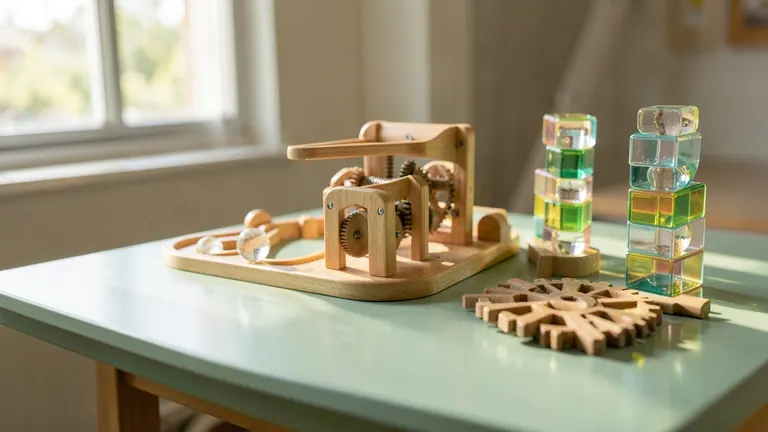
Montessori materials are often “self-correcting”: a shape only fits one hole, a cylinder only fits one socket, so the child can see for themselves whether they got it right. A shape sorter works the same way. At the other end are open materials with no right answer, like a rainbow stacker or a balance board. A good shelf has both. What it doesn’t need are toys that do the playing for the child, with lights and sounds at the press of a button.
Movement is learning
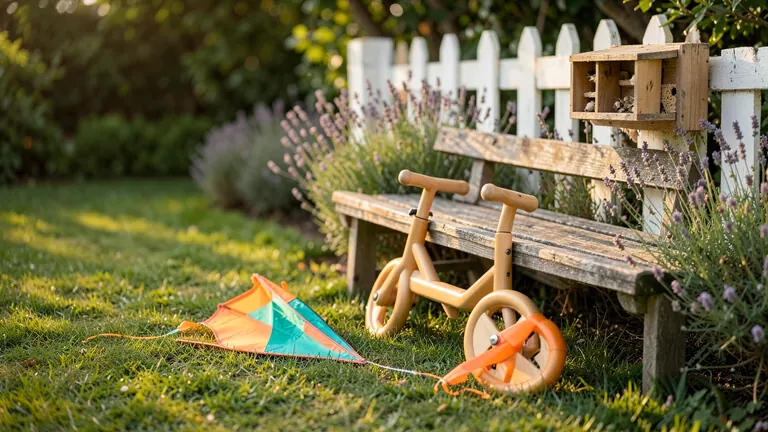
Montessori put a lot of weight on free movement. Babies on the floor rather than in seats, toddlers climbing and carrying heavy things. A curved balance board or a low climbing triangle gives a child somewhere safe to test their body indoors. Outdoors, a balance bike lets a two-year-old go further than their legs alone would take them.
Wait before helping
The hardest part costs nothing and takes the most practice: when a child is struggling with something, count to ten before stepping in. Often they’ll solve it. When they don’t, show them slowly and silently, then hand it back. The pride in “I did it” is the point.
A shelf for a two-year-old, for about €150
- A rainbow stacker or set of nesting cups
- A shape sorter
- A basket of real objects to explore: a wooden spoon, a pine cone, a soft brush
- Two or three board books, facing out
- A pull-along toy
- A balance board on the floor next to the shelf
That’s it. Swap two things each week, and pay attention to what your child returns to. They’ll tell you what they need next.