
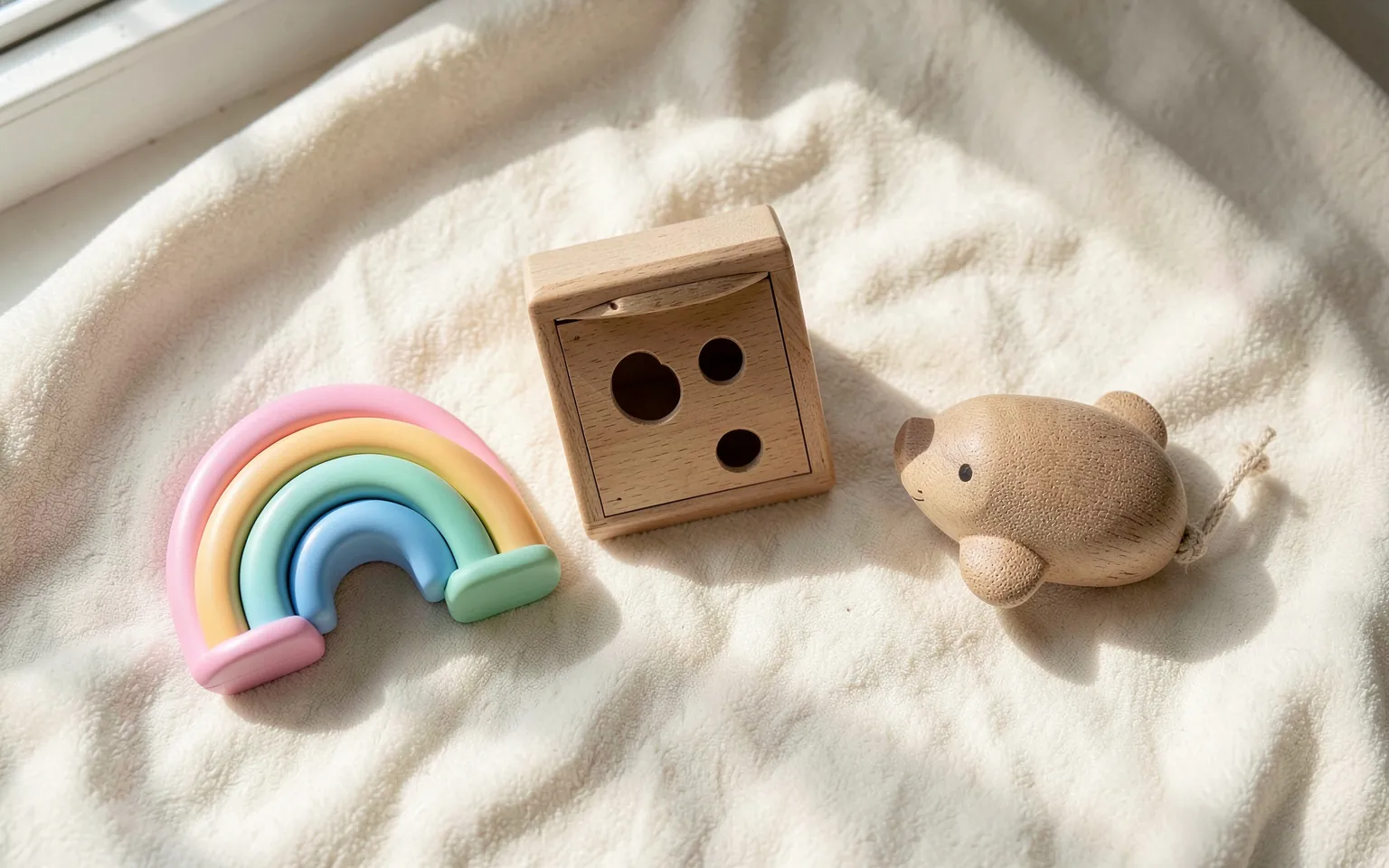
A first wooden toy is often the first thing a family buys that is meant to last. It will be chewed, thrown, sat on and, if it is a good one, handed down. Here are the five questions we ask before a toy for under-threes goes into the shop.
1. Is the smallest piece big enough?
This is the only question that matters more than all the others. The European toy standard EN 71-1 uses a small-parts cylinder, roughly 3 cm wide and 5.7 cm deep, as a stand-in for a small child’s throat. Any piece that fits inside it is a choking hazard for children under three. Toys for this age must have no such pieces, even after a drop or a pull test.
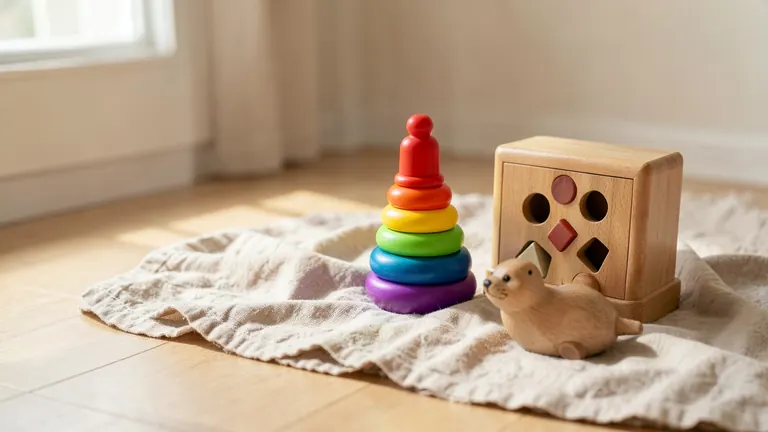
At home, a toilet-roll tube is a rough check: if a piece slides through, keep it away from a baby. The smallest piece of our Pebble Post shape sorter is 4.5 cm across for exactly this reason.
2. Which wood, and which finish?
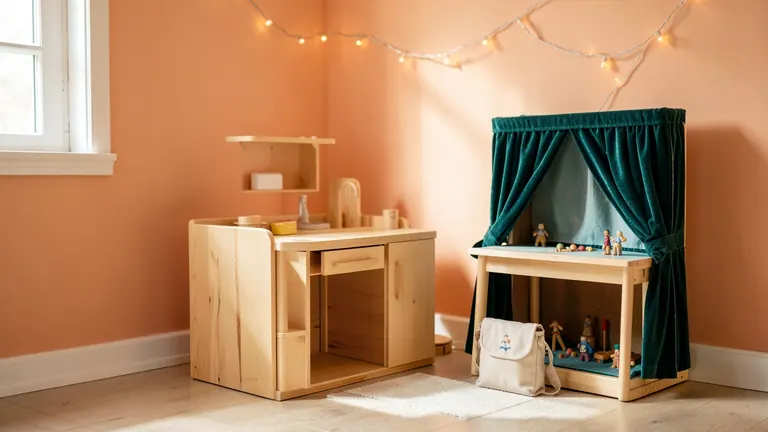
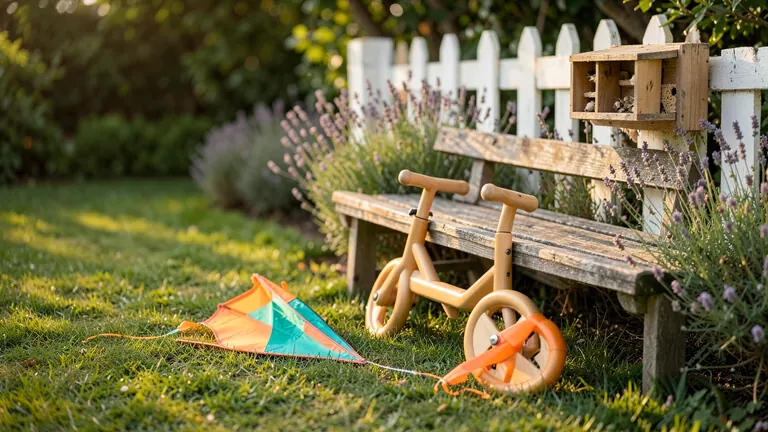
Beech is the classic toy hardwood: dense, smooth, splinter-resistant and heavy enough to feel solid. Birch plywood is strong and stable, good for flat or curved shapes like boards and kitchens. Pine is light and cheap, but soft: it dents and wears faster, so it suits outdoor and building projects better than baby toys.
For finishes, look for water-based paint tested to EN 71-3, which limits the migration of heavy metals and other elements, plus natural oils or beeswax on unpainted wood. A slight wear of the colour after years of play is normal. Paint that flakes off in chips is not.
3. Can it be played with in more than one way?
Toys with one function are finished as soon as the function has been mastered. Open-ended toys keep changing as the child changes. A rainbow stacker is a nesting puzzle at one, a tunnel and a bridge at two, and scenery for small-world play at five. A balance board is a rocker, a slide and a reading nook. When you’re comparing two toys at the same price, choose the one with more answers to “what else could this be?”
4. Does it fit the age the child is now?
The age on the box is a safety minimum, not a sign that a toy will be fun. Buy for what a child can do today with a small stretch: a shape sorter where the circle fits from any angle, so the first success comes quickly; a pull-along once they walk steadily, not while they’re still cruising along furniture. Our age guide goes through each stage.
5. Will it survive a sibling?
Check how parts are joined. Glued joints in a toy that gets dragged and dropped will eventually fail; pins, dowels and bent laminates hold. Check how wheels are fixed. And check whether the toy can be wiped clean, because it will meet yoghurt.
A short list for a first birthday
| Toy | From | Why it works |
|---|---|---|
| Arc of Seven | 12 months | Nesting, stacking and years of building after |
| Pebble Post | 12 months | Posting game with a roll-out front, no frustration |
| Ollie the Otter | 18 months | Company for new walkers |
| Wobble Cove Junior | 18 months | Indoor movement on rainy days |
One good wooden toy is a better first present than five plastic ones. If grandparents ask what to buy, this list is a good place to start.