
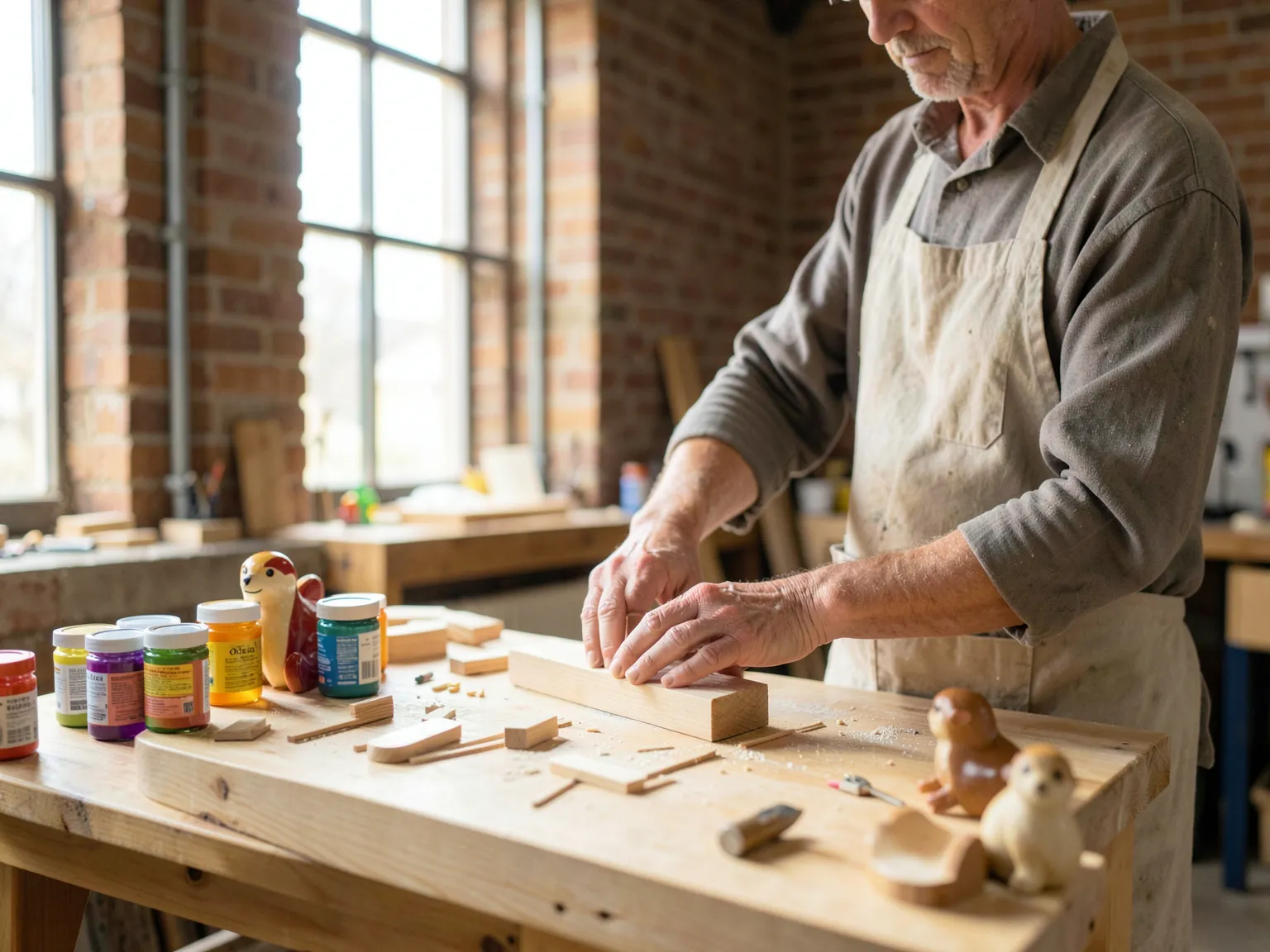
Mathlab began in 2021 in a terraced house in Ghent, with two parents, a toddler, a baby on the way and a living room that was slowly disappearing under plastic.
Most of the toys we had been given were loved for a week and then ignored. The few that weren’t (a set of beech blocks, a rocking board, a battered wooden duck on wheels) had three things in common. They were made of something that felt good to hold. They could be played with in more than one way. And they fitted the age our son actually was, not the age on a marketing brief.
So we started looking for more toys like that, for us and then for friends. Mathlab is the shop that came out of it.
Fewer toys, chosen better
We sell sixteen toys. That is deliberate. Every toy in the shop has been played with by children at the age on the box, and by children a year younger and a year older, because that is how toys are really used in families with more than one child. If a toy doesn’t hold their attention for more than a few days, it doesn’t make it in.
The sixteen are split into four collections that follow how play changes as children grow:
- Little Hands: first toys for 0 to 3 years, about grasping, posting, stacking and walking.
- Tinker Lab: building and STEM toys for 3 to 10, about cause and effect.
- Story Corner: pretend play for 3 to 8, about language and feelings.
- Wild Days: outdoor toys and a family game, about moving, noticing and playing together.
What we look for in a toy
Honest materials. FSC-certified beech, birch and pine, water-based paints, cotton and wool felt. We use plastic only where it does a job wood cannot, like the sealed frames of magnetic tiles or the gearbox of a solar robot, and we say so on the product page.
Tested to EN 71. Every toy is CE marked and tested to the European toy safety standard EN 71, parts 1, 2 and 3. Our toy safety page explains what that covers.
The right age, not just the minimum. A label that says “3+” tells you when a toy is safe, not when it is fun. Each product page lists the age a toy fits best, and our age guide explains what changes in play from birth to ten.
Open-ended play. The best toys don’t have one right way to use them. A balance board is also a bridge and a slide. A rainbow stacker is also a tunnel, a fence and a cradle.
Packaging you can keep. Recycled card, paper tape and no plastic windows. The boxes are sturdy enough to store the toy in.
Why an otter
River otters play their whole lives. They slide down banks, juggle pebbles and chase each other through the water long after they’re grown. We liked the idea of a mascot that never grows out of playing. The flower is for the other half of the name: things that bloom in their own time.
Mathlab is a demonstration store. The brand, its story and its products are illustrative, and no orders are taken or shipped. Questions: support@mathlab.xyz.